Oct 19, 2026Product Knowledge
How to Inflate Foil Balloons: A Simple Guide to Air, Helium, and Common Mistakes
Learn how to inflate foil balloons with air or helium,avoid overinflation, troubleshoot valve and sealing issues, and check balloon quality before orders. Practical tips for retailer,distributor.
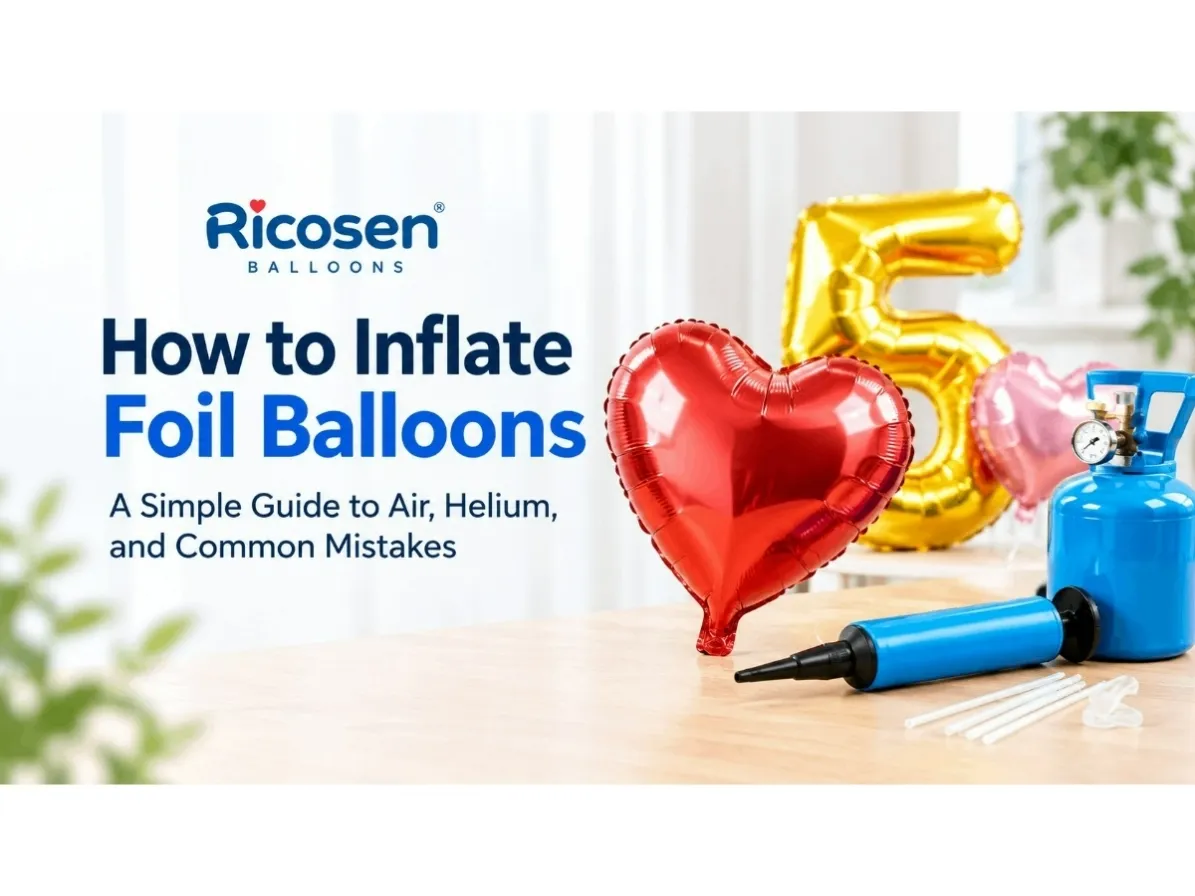
How to Inflate Foil Balloons: A Simple Guide to Air, Helium, and Common Mistakes
Foil balloons are easy to inflate once you know how the valve works. But using the wrong tool, adding too much air, or choosing the wrong gas can cause problems.
Whether you are preparing balloons for an event or buying them in bulk for resale, this guide explains how to inflate foil balloons correctly and what to check when something goes wrong.
1.How to Inflate a Foil Balloon
Most self-sealing foil balloons have a small inflation valve near the bottom of the balloon.
Follow these steps:
1.Find the valve. Look for the narrow opening at the bottom of the balloon.
2.Insert the inflation tool. Gently slide a drinking straw or a suitable inflation nozzle into the valve. Do not force it, as this may damage the inner sealing layers.
3.Inflate slowly. Add air or helium gradually. Keep the balloon supported so the seams are not under unnecessary tension.
4.Check the shape. Stop when the balloon reaches its intended shape and the surface looks smooth, without excessive stretching.
5.Remove the tool carefully. For most self-sealing foil balloons, the valve closes automatically after the straw or nozzle is removed. Follow the supplier’s instructions if the balloon uses a different valve design.
For larger balloons or frequent use, a suitable balloon pump or inflation machine can save time. Always use equipment designed for the balloon and the gas you intend to use.
2.Should You Use Air or Helium?
The right choice depends on how the balloon will be displayed.
Use air when:
You are making balloon backdrops, garlands, or wall decorations.
The balloon will be attached to a stand or other support.
You want a simple option for indoor displays without floating balloons.
Use helium when:
You want the balloon to float freely.
You are preparing floating number balloons, letter balloons, or other suitable foil designs.
Not every foil balloon is suitable for floating. The balloon must have enough lift for its size and weight. Small foil balloons less than 18inch balloons, for example, may not float even when filled with helium.
Float time also varies with balloon size, material, construction, helium quality, and environmental conditions. If floating performance matters for your business, test the specific balloon style before making promises to customers.
3.When Should You Stop Inflating?
Foil balloons are not designed to stretch in the same way as latex. Adding too much gas can put unnecessary pressure on the seams and may cause damage.
Stop inflating when the balloon reaches its intended shape and the major creases have relaxed. Do not keep adding gas simply to make the surface look completely tight.
The correct appearance varies by design. Some shapes have natural folds or defined edges, so avoid judging every balloon by the same standard.
If the balloon looks unusually swollen, the seams are under tension, or you notice signs of damage, stop immediately.
4.Why Won’t My Foil Balloon Inflate or Stay Inflated?
If a foil balloon is difficult to inflate or becomes soft soon after inflation, check the following:
1.The inflation tool may not be inserted far enough.
The valve opening can be narrow. Reposition the straw or nozzle gently instead of forcing it.
2.The balloon may be overinflated or damaged.
Excessive pressure, rough handling, or damage around the seams can affect performance.
3.There may be a product quality issue.
If several balloons from the same batch show the same problem when inflated correctly, the issue may involve the valve, sealing, or manufacturing consistency.
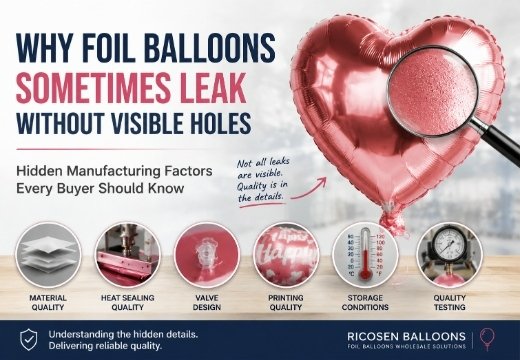
For more detail, read our guide on Why Foil Balloons Sometimes Leak Without Visible Holes.
5.What Should Wholesale Buyers Check?
For retailers, distributors, and importers, inflation problems are more than a customer service issue. Repeated defects can lead to complaints, returns, and wasted inventory.
Before placing a large order, consider these practical checks:
1.Test a representative sample. Inflate several balloons from the sample batch using the recommended method.
2.Check valve performance. Confirm that the inflation tool can be inserted without damaging the valve and that the balloon seals properly afterward.
3.Observe shape and seams. Look for unusual swelling, damaged edges, or inconsistent sealing.
4.Record recurring problems. Note the balloon design, size, batch information, inflation method, and the number of affected pieces.
5.Contact your supplier with clear evidence. Photos or short videos can help the supplier assess the issue more accurately.
A single problem does not automatically mean the entire batch is defective. However, repeated failures under the same conditions deserve investigation.
If you are sourcing foil balloons for resale, choosing a supplier that can provide consistent products and respond clearly to quality concerns is just as important as comparing unit prices.
Explore our Wholesale Foil Balloons for more information about products for wholesale buyers.
Final Thoughts
Inflating foil balloons correctly is simple: use the right tool, add air or helium slowly, and stop when the balloon reaches its intended shape. Avoid forcing the valve or overinflating the balloon.
For wholesale buyers, testing samples and keeping clear records of repeated problems can help distinguish handling mistakes from possible product defects.
A little care during inflation can help reduce avoidable damage and create a better experience for both retailers and their customers.