Oct 3, 2026Seasonal & Holidays
Turn 2026 Balloon Trends into Profitable Product Lines
Stop chasing hype. Learn how professional balloon buyers convert 2026 trends into low-risk, high-margin product lines through disciplined SKU selection and strategic timing.
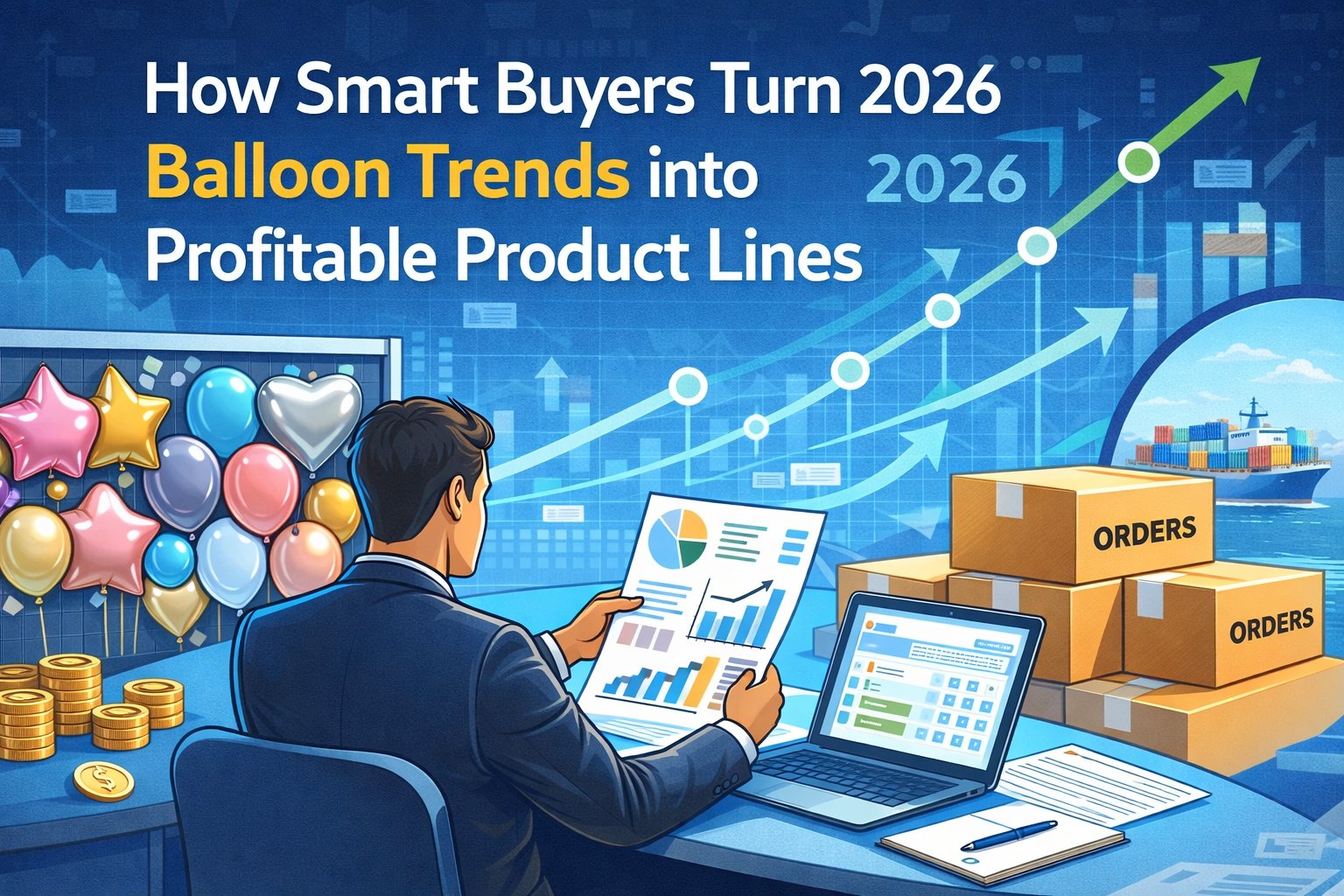
Every year, the market is flooded with new colors, themes, and "must-have" designs. But here is the hard truth: The gap between a profitable season and a stressful one isn't about who spots the trend first—it’s about who executes it best. Most buyers fail not because their taste is bad, but because their execution is emotional and unstructured. In the balloon business, trends don't create profit. Systems do.
Trend ≠ Product: The Common Sourcing Trap
A common mistake is treating a "viral trend" as a finished product line. When an average buyer sees a trending design, they often: Over-expand: Adding too many colors too fast. Over-order: Committing to high MOQs before testing the market. Over-rely: Letting experimental items crowd out core inventory. The result? Slow sell-through, trapped cash flow, and an "inventory graveyard." A trend is just a signal; a product line is a calculated decision.
The Professional Filter: Sorting Trends by Risk
Experienced buyers don’t ask, “Is this hot?” They ask, “What role does this play in my mix?” Before signing a PO, they filter trends into three categories: 1. Convertible Trends: Designs that can evolve into "evergreen" staples with stable, long-term demand. 2. Seasonal Sprints: High-velocity items with a strict expiration date (e.g., Valentine’s or Graduation). 3. Marketing Bait: Items that look great on Instagram but sell in low volumes. The Strategy: High volume goes to Category 1 & 2. Category 3 is for visibility only—never for heavy inventory. These items build attention, not inventory turnover.
Building a "Micro-Line" for Lower Risk
Smart buyers never bet on a single standalone SKU. They build a structured micro-line that includes: The Anchor: A core size/shape that carries the volume. The Safe Bet: Neutral or proven secondary colors to hedge risk. The Flex: Optional extensions that can be reordered quickly if the trend spikes. This modular approach allows for controlled testing and faster replenishment without the "all-in" risk.
Timing is Greater Than Talent
The biggest risk with trends isn’t failure—it’s overconfidence. Even a great trend will lose money if it arrives two weeks late or sits on the shelf two months too long. Smart buyers prioritize: Discipline over Volume: Start with lean quantities. Speed over Size: Focus on how fast you can reorder, not how much you can fit in the first container. Reality-Based Dating: Aligning production slots with realistic shelf dates to avoid the "peak season rush."
Conclusion: Execution is the Only Edge
Profitable buyers don’t win by chasing every shiny object. They win by executing fewer trends with higher discipline. By removing emotion from the purchasing plan, they protect their margins and stabilize their quality. In 2026, the opportunity is in the trend—but the profit is in the process.