Purchasing Balloons Is Not Just About Price and Quantity
Open most balloon purchasing sheets and you’ll usually see the same four columns:
SKU
Product description
Order quantity
Unit price
At first glance, this seems perfectly adequate for ordering balloons from suppliers. The numbers are there, the products are listed, and the costs are clear.
But after a few seasonal cycles, many balloon distributors discover something frustrating: inventory problems rarely come from the balloons themselves. They come from the missing information that was never recorded in the purchasing sheet.
When buyers lack visibility on timing, selling windows, and reorder logic, purchasing decisions start relying on memory or instinct. And that’s exactly where balloon inventory risk begins.
Why Balloon Purchasing Sheets Slowly Stop Working
The problem becomes obvious as balloon product lines grow.
A distributor may manage dozens or even hundreds of SKUs across different selling periods:
Graduation balloons
Back-to-school balloons
Halloween balloons
Christmas balloons
Valentine’s Day balloons
Without structured purchasing data, three operational problems appear again and again.
Some balloon shipments arrive too late, missing the peak selling period.
Other balloons arrive too early, sitting in warehouses for months.
Seasonal balloons remain in inventory after the holiday has already passed.
The purchasing sheet still records what was ordered, but it no longer helps buyers answer the most important operational questions:
When will the balloons actually arrive?
How long do we realistically have to sell them?
Is a reorder still safe?
The spreadsheet is still there — but it no longer protects the business from inventory risk.
3 Critical Columns Every Balloon Purchasing Sheet Needs
Experienced balloon buyers eventually expand their purchasing sheets beyond basic pricing data. Three additional columns become essential because they directly control seasonal inventory exposure.
Expected Arrival Window
Recording only the order date isn’t enough.
Professional buyers track the expected arrival window for each balloon shipment, especially when production and shipping lead times vary.
This simple column prevents two common problems:
Seasonal balloons arriving after the peak demand period
Large shipments arriving too early, locking up warehouse space and cash flow
For event-driven products like graduation balloons or Christmas balloons, timing often determines whether inventory becomes profit or leftover stock.
Selling Window (Seasonal Deadline)
Unlike many consumer goods, balloons have a practical selling deadline.
A graduation balloon may still be perfectly usable after June, but demand disappears quickly once the ceremony season ends.
That’s why experienced distributors track a selling window column in their purchasing sheet. Instead of focusing only on product condition, they record the last realistic date when the balloon SKU can still sell at normal speed.
This forces purchasing decisions to align with real market timing, rather than optimistic assumptions.
Reorder Logic
Reordering balloons should not depend on last-minute judgment.
Advanced purchasing sheets include a simple reorder rule that removes uncertainty.
Examples might include:
Reorder when inventory drops below 20% of the original order quantity
Reorder only if the SKU has maintained stable sales for 3–4 weeks
Stop reordering when the selling window is less than 60 days away
By defining reorder logic early, balloon buyers avoid the common trap of rushing large restocking orders late in the season.
A Purchasing Sheet Is Also a Risk Management Tool
Many buyers treat purchasing sheets as basic accounting tools.
But in balloon distribution, the sheet also functions as a risk management system.
When the right data is tracked, the spreadsheet can answer critical questions before a reorder is placed:
Will this balloon shipment arrive in time for peak demand?
Is there still enough selling window left?
Does this SKU still justify additional inventory?
With these answers visible, purchasing becomes calmer and more predictable. Without them, inventory management turns into reactive decision-making.
Balloon Purchasing Sheet Checklist
If you want your purchasing sheet to support real inventory control, make sure it includes more than just price tracking.
A practical balloon purchasing sheet should contain:
SKU and detailed balloon description
Supplier information and lead time
Order quantity, unit price, and total cost
Expected arrival window
Selling window or seasonal deadline
Clear reorder logic for each balloon SKU
These columns don’t complicate purchasing. They make balloon inventory decisions significantly easier.
Final Thought
Inventory risk in the balloon business rarely comes from dramatic mistakes.
More often, it grows quietly from small gaps in information — details that were never recorded in the purchasing sheet.
Adding just a few operational columns can transform a simple spreadsheet into a reliable decision tool. Over time, this structure helps balloon distributors reduce leftover seasonal stock, improve timing, and manage inventory with far more confidence.

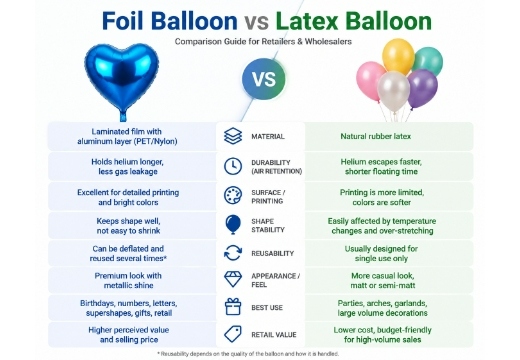 Why Foil Balloons Last Longer Than Latex Balloons: A Durability Comparison Guide
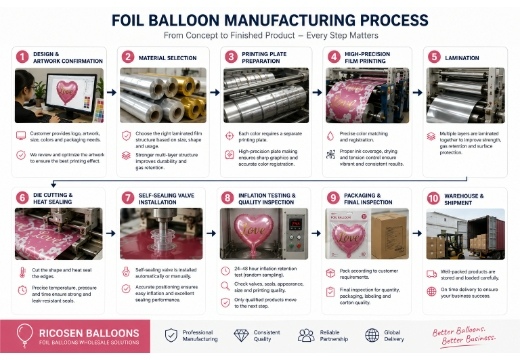 How Are Foil Balloons Made? Inside the Factory: What Happens Before a Foil Balloon Enters Mass Production
 Why Foil Balloons Sometimes Leak Without Visible Holes: Hidden Manufacturing Factors Every Buyer Should Know
 How Successful Balloon Retailers Build a Product Mix That Sells All Year