Introduction: Structure vs. Luck in Balloon Sourcing
In the global foil balloon industry, the gap between a profitable distributor and a struggling one isn't just the unit price—it’s the purchasing system. Two buyers can source the same Mylar balloon from the same factory, yet one thrives while the other faces stockouts and quality complaints.
The secret? A professional purchasing sheet. It’s not just an Excel file; it’s a risk-management blueprint.
1. Beyond the SKU: A Tool for Risk Control
Most amateur buyers treat a purchasing sheet as a simple list of quantities. However, a professional-grade sheet must answer three strategic questions:
Optimal Lead Time: When exactly must this order be placed to hit the selling window?
Cash Flow Mapping: How will this order impact capital liquidity throughout the quarter?
Peak Season Buffer: What is the contingency plan if factory capacity tightens?
Reactive purchasing leads to rushed production and expensive air freight. Proactive purchasing ensures stability.
In short: A purchasing sheet without timing and risk is just a price list.
2. Segmenting Inventory by Demand Cycles
A common mistake in foil balloon sourcing is treating "Number Balloons" the same as "Holiday Balloons." Your purchasing sheet should categorize items to optimize MOQ:
Evergreen Staples: (Letters, Numbers, Solid Color) Requires steady replenishment and high-volume negotiation.
Seasonal Peaks: (Valentine’s Day, Halloween, Christmas) Requires ordering 4-6 months in advance.
Trend-Driven Items: (Themed parties, New Licensed Designs) Requires smaller test batches and fast reorder cycles.
3. Mastering MOQ Logic Over Unit Price
Chasing the lowest unit price is a trap. If a low price comes with a disorganized Minimum Order Quantity (MOQ) structure, it often results in:
Inconsistent color batches.
Hidden labor costs in sorting and packing.
Higher defect rates due to rushed "filler" production.
Smart buyers don't just ask for discounts; they ask: "How can we structure this order to optimize factory efficiency?"
Low unit price with poor MOQ logic is the fastest way to destroy margins.
4. Reverse-Engineering the Supply Chain Calendar
Professional buyers work backward. They don't start with a shopping list; they start with a "Shelf Date." To ensure a smooth season, your purchasing sheet must account for:
Material Sourcing: (1-2 weeks)
Production Window: (3-5 weeks depending on season)
Quality Control & Loading: (1 week)
Sea/Land Transit: (4-8 weeks)
By the time your competitor is "reacting" to a holiday, a professional buyer’s stock is already clearing customs.
Shelf date decides order date — not the other way around.
5. The "Hidden Column": Supply Chain Risk Factors
If your purchasing plan doesn't track risk, you aren't managing a supply chain—you're gambling. A robust system tracks:
Factory Capacity Limits: Identifying when the manufacturer is at 90%+ utilization.
Raw Material Fluctuations: Monitoring the cost of nylon and aluminum film.
Logistics Volatility: Anticipating port congestion or container shortages.
Conclusion: Discipline is the Ultimate Profit Driver
In the foil balloon business, profit isn't found in the "cheapest quote"—it's built through purchasing discipline. A structured plan protects your margins, stabilizes your quality, and strengthens your relationship with your supplier.
At Ricosen, we do more than manufacture high-quality foil balloons. We partner with wholesalers to design purchasing systems that survive peak-season chaos and drive long-term growth.
Looking to stabilize your balloon supply chain? [Contact Ricosen today] for a consultation on optimizing your seasonal purchasing strategy.

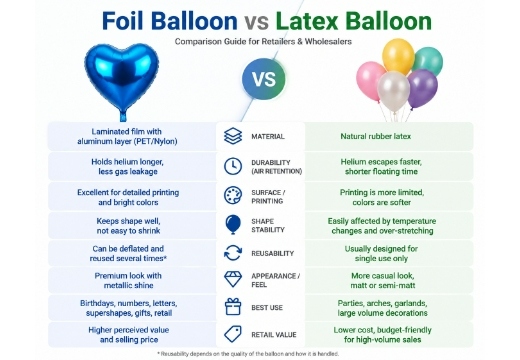 Why Foil Balloons Last Longer Than Latex Balloons: A Durability Comparison Guide
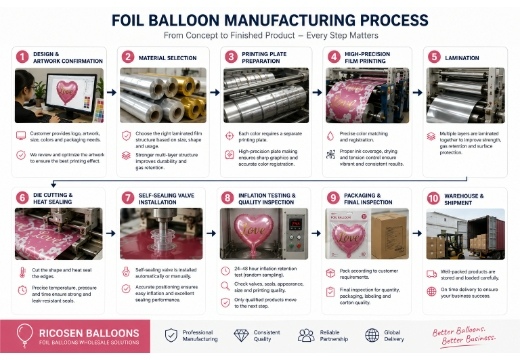 How Are Foil Balloons Made? Inside the Factory: What Happens Before a Foil Balloon Enters Mass Production
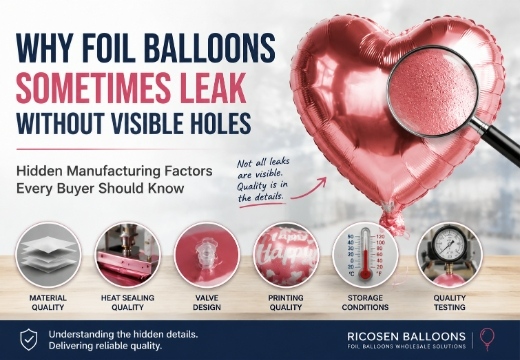 Why Foil Balloons Sometimes Leak Without Visible Holes: Hidden Manufacturing Factors Every Buyer Should Know
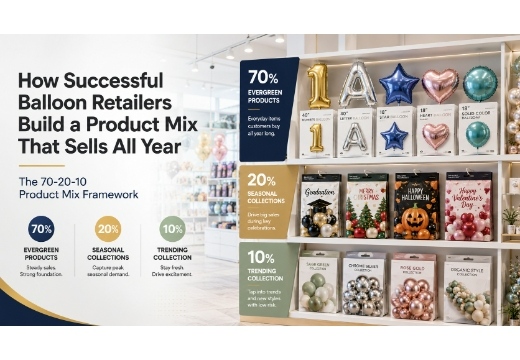 How Successful Balloon Retailers Build a Product Mix That Sells All Year