
About Us
How Successful Balloon Retailers Build a Product Mix That Sells All Year
Views : 284
Update time : 2026-07-10 16:49:17
Introducing the 70-20-10 Framework to balance inventory risk, maintain steady cash flow, and capture massive holiday peaks.
Every retail buyer wants consistent, predictable sales throughout the year. Yet many balloon businesses experience the exact opposite. Sales surge during major holidays, only to slow to a crawl once the season ends. Shelves become crowded with slow-moving stock, cash flow tightens, and buyers are left wondering what went wrong.At first glance, it looks like a drop in customer demand. But in reality, it is usually a product mix problem.
Successful balloon retailers don't just stock more products than their competitors. They build a balanced assortment that generates steady day-to-day sales while still capturing massive revenue spikes during seasonal events. Instead of chasing every single new design that enters the market, experienced retailers know there is a better approach—one that combines best-selling balloon products with long-term inventory planning instead of chasing short-term trends.
The 70-20-10 Product Mix Framework
To make inventory planning practical and measurable, top-performing retailers build their purchasing strategy around an actionable model: The 70-20-10 Product Mix Framework.Instead of reacting to every new trend, experienced buyers build a product mix where every product has a clear purpose—keeping inventory moving, cash flowing, and profits growing throughout the year.
So what does a successful balloon product mix actually look like?
Let's explore a practical framework that many experienced retailers naturally follow.
70% Layer — Evergreen Core (The Foundation):The largest portion of your inventory. These are stable, high-volume items that generate predictable cash flow day in and day out
20% Layer — Seasonal Collections (The Accelerators): Timed product launches specifically brought in to capture massive buying waves during major celebrations.
10% Layer — Trend-Driven Items (The Freshness): A small, controlled sandbox for viral colors, themes, and social media trends that keep your store exciting without risking your capital.
While the exact percentages may vary depending on the market, customer base, and retail format, this framework helps retailers allocate inventory with greater discipline and significantly lower risk
The 70% Base: Evergreen Products Build a Stable Foundation
Think of the 70-20-10 framework not as a rule for counting SKUs, but as a guide for allocating your inventory investment, purchasing budget, and shelf space.Evergreen products deserve the largest share because they generate the most consistent demand and create the strongest foundation for long-term cash flow.Number and letter balloons
Classic star and heart shapes
Solid color foil and latex balloons
People celebrate birthdays, anniversaries, baby showers, and corporate milestones every single week of the year. Their demand doesn't disappear after one holiday.
Many of these products also form the foundation of effectiveballoon displays, making them easier for retailers to merchandise throughout the year.
Allocating 70% of your product mix here ensures that your core revenue is protected. Before you dive into risky new categories, ensure your evergreen foundation is strong and consistently in stock. Without it, even the most exciting new trends won't save your bottom line.
The 20% Middle: Seasonal Products Create Revenue Peaks
While evergreen products provide stability, your 20% seasonal allocation provides acceleration. Major holidays like Valentine’s Day, Graduation season, Halloween, Christmas, and Mother’s Day create predictable waves of intense buying activity.These products may only sell for a few weeks, but they deliver your highest sales volumes and best profit margins per transaction.
The secret to managing this 20% is early preparation.
The key is timing.Successful retailers don't wait for demand to appear—they follow a structured seasonal sales planning process months before customers begin shopping.
Waiting until the last minute always leads to higher emergency shipping costs, poor product selection, and missed sales. Keep this layer strictly capped at around 20% so that leftover holiday stock never crowds out your everyday business.
The 10% Peak: Trend Products Keep Your Store Fresh
Social media platforms like Instagram and TikTok have radically accelerated how quickly balloon trends catch fire. From chrome finishes and muted pastel palettes to organic arches and movie-inspired themes, new styles emerge constantly.These balloons trends are fantastic for attracting attention and encouraging repeat visits from design-conscious customers. However, experienced buyers know a crucial truth: Trends capture attention. Evergreen products pay the bills.
By limiting trend items to just 10% of your product mix, you get the best of both worlds. Your store feels modern, trendy, and alive, but if a viral trend suddenly fades faster than expected, your financial risk is capped at a minor fraction of your stock. A smart way to test the waters is by introducing these trends through limited seasonal collections to gauge real customer feedback before ordering larger volumes.
Retail Insight
The 70-20-10 Product Mix Framework is not a rigid formula.It is a practical decision-making framework that helps retailers balance stability, seasonal growth, and innovation while reducing inventory risk.
Balance Traffic Drivers with Margin Drivers
Within your 70-20-10 framework, you must maintain a careful balance between two types of financial inventory: Fast Movers and High-Margin Products.Fast Movers (The Traffic Drivers): Items like standard number balloons and solid foils sell incredibly fast. They keep inventory turning over and bring steady foot traffic into your store, but their individual profit margins are usually lower.
High-Margin Products (The Profit Builders): Items like premium supershapes, custom coordinating gift bundles, and complete balloon sets naturally command much higher retail prices. They might sell more slowly than a basic birthday balloon, but they bring in significantly more profit per transaction.
The most successful retailers make them work together. Fast-moving items get customers through the door, and premium products maximize your profit once those customers start shopping.
Ready-to-Sell Balloon Sets: The Perfect 70-20-10 All-Rounder
One of the most profitable shifts in the modern balloon market is the rise of theready-to-sell balloon sets. Today's busy consumers aren't just looking for loose balloons; they are looking for ready-made celebration solutions. Instead of spending time picking out five separate items, they prefer buying curated kits that match perfectly in color and theme.The beauty of ready-to-sell balloon sets is that they fit seamlessly into every single layer of your 70-20-10 framework:
A classic birthday bundle works as a year-round evergreen (70%).
A themed graduation kit captures intense seasonal demand (20%).
A kit using a viral social media color palette lets you offer a trend (10%) without stocking dozens of loose SKUs.
For retailers, sets dramatically simplify your shelf displays, speed up customer purchasing decisions, and easily increase your Average Order Value (AOV).
Run a Quarterly "Health Check" to Protect Your Framework
A truly profitable product mix is never static. Consumer tastes evolve, color trends shift, and seasonal demands change from year to year. That’s why seasoned retailers run a structured product review every quarter to make sure their inventory hasn't drifted away from the 70-20-10 target.During your quarterly review, look past the guesswork and ask hard questions:
1.Which core items are consistently generating repeat orders?
2.Which products are just taking up valuable shelf space without contributing to sales?
3.Which categories are delivering our healthiest profit margins?
You can use a simple ABC Inventory Strategy to clear out the noise:
"A" Items: Your absolute best-sellers. Keep them heavily stocked.
"B" Items: Steady performers that keep the gears turning but need monitoring.
"C" Items: Slow-moving dust-gatherers. Markdown, liquidate, and replace them with higher-performing products.
The goal isn't to keep adding products. It's to continuously improve the quality of your product mix.
Using a structured balloon purchasing sheet also makes quarterly product reviews much more objective and data-driven.
Work with Suppliers Who Value Your Retail Success
Choosing the right products is only half the battle; partnering with the right supplier is what seals the deal. The best suppliers don't just act as factories trying to push their entire catalog onto you. The best suppliers don't simply supply balloon products—they improve purchasing decisions.Look for partners who offer realistic production timelines rather than empty promises, and who share genuine market data on what is actually selling globally. As we explained in our guide on reducing inventory risk when choosing balloon suppliers, a reliable retail-minded supplier removes uncertainty, protects your cash flow, and helps you maintain a balanced product mix as market demand evolves.
Final Thoughts
A successful product mix isn't measured by how many products you carry.It's measured by how confidently every product earns its place on the shelf.
Build your foundation with evergreen products.
Accelerate growth through seasonal collections.
Stay relevant with carefully selected trends.
When every layer supports a clear business objective, your inventory becomes healthier, your cash flow becomes stronger, and your business becomes far more resilient throughout the year.
Because great retailers don't simply sell more balloons.
They build better product strategies.
Related Articles
Want to build a stronger balloon retail business? These guides may also help:
How Retail Buyers Reduce Inventory Risk When Choosing Balloon Suppliers
Why Some Balloon Products Become Best Sellers While Others Sit on Shelves
How Successful Balloon Retailers Prepare for Seasonal Sales 3–6 Months in Advance
Why More Retailers Are Choosing Ready-to-Sell Balloon Sets Over Individual SKUs
相关新闻
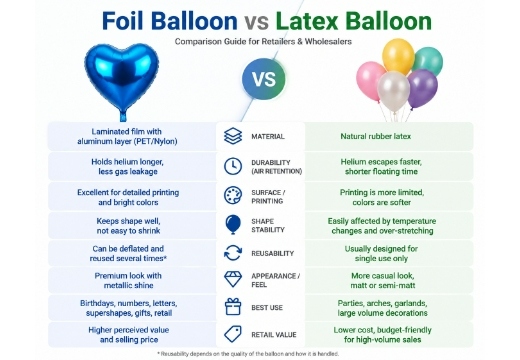 Why Foil Balloons Last Longer Than Latex Balloons: A Durability Comparison Guide
Aug 02,2026
Foil balloons and latex balloons serve different purposes in the balloon industry. This guide explains the key durability differences between foil and latex balloons, including material structure, helium retention, printing performance, reusability, and retail value. Learn why many wholesalers, retailers, and event suppliers choose foil balloons for premium product lines and how selecting the right balloon type can improve customer satisfaction and business profitability.
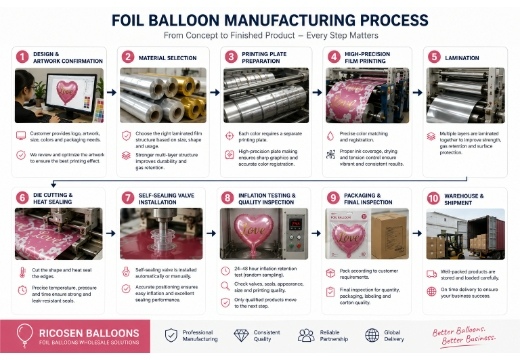 How Are Foil Balloons Made? Inside the Factory: What Happens Before a Foil Balloon Enters Mass Production
Jul 26,2026
Behind every high-quality foil balloon is a carefully controlled manufacturing process. This article takes you inside a professional foil balloon factory, explaining every stage from artwork preparation and material selection to printing, lamination, heat sealing, quality inspection, and final packaging. Learn how each production step influences balloon quality and how buyers can evaluate suppliers beyond price alone.
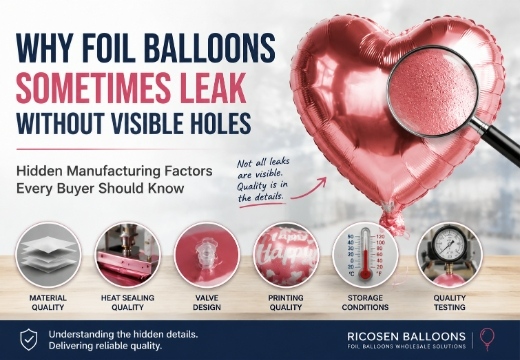 Why Foil Balloons Sometimes Leak Without Visible Holes: Hidden Manufacturing Factors Every Buyer Should Know
Jul 17,2026
Why do foil balloons leak without visible holes? This article explains the hidden manufacturing factors affecting foil balloon durability, including materials, sealing, valves, printing, storage, and quality testing. Learn how professional buyers evaluate suppliers and avoid quality problems.
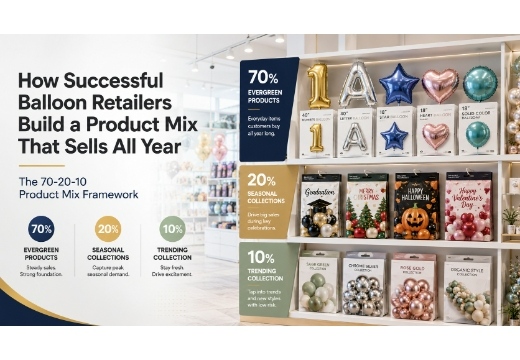 How Successful Balloon Retailers Build a Product Mix That Sells All Year
Jul 10,2026
A successful balloon business isn't built by offering the most products—it's built by offering the right mix of products.
This guide introduces the 70-20-10 Product Mix Framework, a practical approach that helps balloon retailers balance evergreen products, seasonal collections, and trend-driven items for healthier inventory, stronger cash flow, and more consistent year-round sales. Whether you're expanding your product assortment or refining your purchasing strategy, this framework offers actionable insights to build a more profitable retail business.